


ONLYFUN: Random Video Chat
4.367.00 Reviews
App Specs
- Version
- 60.41.14
- Updated On
- License
- Free
- Downloads
- 100,000+
- Developer
- Yoloria Teching Limited
- Categories
- Social
- Platform
- Android
Screenshots

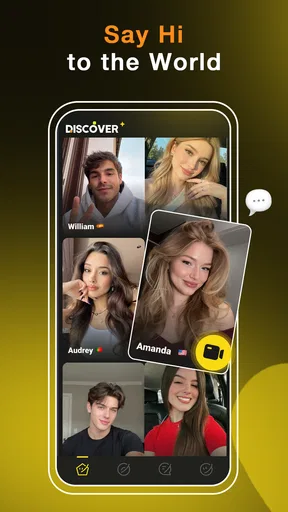


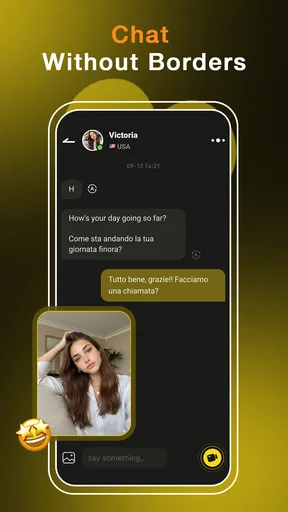

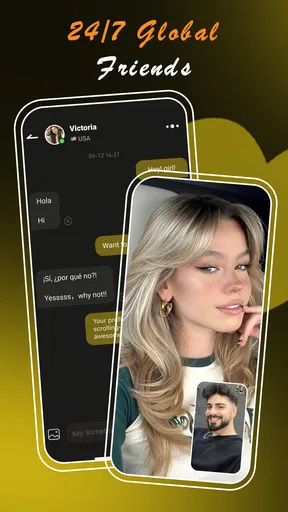
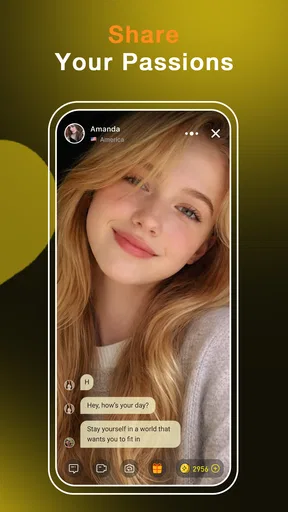
 Analysis by AppCompare
Meeting new people through a phone can be exciting, awkward, or both within the same minute. ONLYFUN: Random Video Chat takes that uncertainty as its entire starting point: open a social app, enter a live conversation, and see who appears. I spent time looking at it as more than a quick novelty, paying attention to how useful it feels when you want spontaneous interaction rather than a carefully built profile or a familiar social feed.
My overall impression is that ONLYFUN is best understood as a chance-based social experience. It is not trying to replace a messaging service where you already know everyone, and it does not offer the slow, profile-led approach of a conventional dating platform. Its appeal is the immediate moment. That can make it lively, but it also means the quality of each session depends heavily on the people you encounter and on how comfortable you are with unpredictability.
How the app works as a social experience
ONLYFUN is a free social app from Yoloria Teching Limited, aimed at adults and listed for Mature 17+ users. Its central idea is simple: start a random chat or live video conversation and interact with strangers without needing a long discovery process first. The store’s short label is “ONLYFUN,” while the longer description points toward spontaneous conversation and meeting unfamiliar people.
That simplicity is important. Many social apps ask you to build a public identity before anyone can respond to you. You choose photos, write a description, follow accounts, collect reactions, and wait for conversations to develop. ONLYFUN moves the emphasis away from that preparation. If you are the kind of person who would rather say hello than spend twenty minutes polishing a profile, the format has an obvious advantage.
It also changes what “success” means. On a profile-based service, you may measure progress by matches, followers, or replies. Here, a good session may simply be one conversation that feels natural before it ends. I found that mindset healthier for this type of app. Expecting every random connection to become a friendship would make the experience frustrating very quickly.
The app’s current version is 60.41.14 and it requires an operating system version of 12 or later. That makes checking your device compatibility worthwhile before you plan to use it regularly. A newer social app can be demanding in practice, especially when live video is involved, so I would also approach it with a stable connection, a charged phone, and a place where you can speak without constantly interrupting the conversation.
What the free entry point really gives you
The important cost distinction is that ONLYFUN can be installed and entered without an upfront purchase. That makes it easy to test rather than committing money before you know whether random video chat suits your personality. For a curious user, this is a meaningful strength: you can judge the pace, the atmosphere, and your own comfort level first.
Worth Reading Before You Choose

EA SPORTS FC Mobile 26 Is a Bigger Football Game, but It Takes Time

Flipboard Shows What News Apps Must Do Beyond the Feed

Switching to Android Auto Means Rethinking Your Driving Routine

Google Calendar Makes a Crowded Week Easier to Manage

Ludo King Makes the Most of the Minutes Between Plans

Baby Panda World Brings Quick Play to Modern Phones, but Its Game Library Feels Busy
There are in-app purchases ranging from $1.99 to $144.99 per item. I would not treat those purchases as part of the basic cost of trying the service. They represent an optional spending layer, and their presence means the free experience should be evaluated on its own before you consider paying for anything. The sensible approach is to use the app free first, decide whether the conversations are genuinely worthwhile, and only then think about whether an extra purchase improves something you already enjoy.
That distinction matters because random chat apps can encourage quick decisions. A lively conversation may create the feeling that spending immediately will preserve or improve the moment. I recommend slowing down. Do not buy simply because one interaction was entertaining, and do not assume that paying will solve the unpredictable nature of meeting strangers. Money cannot guarantee chemistry, respectful behavior, or a steady stream of conversations.
For families, the Mature 17+ label should be taken seriously. This is not an app I would hand to a younger teenager as a casual way to make friends. Live conversations with strangers require judgment, boundaries, and the ability to leave immediately when something feels wrong. Adults should be equally clear about that before using it, especially if they are expecting a relaxed, family-friendly environment.
Where the value comes from
The strongest value is immediacy. ONLYFUN removes much of the waiting associated with ordinary social platforms. You do not need to build a large network before there is a chance to speak with someone. For an adult who has moved to a new area, works remotely, or simply wants a short burst of human interaction after a quiet day, that can be more useful than scrolling through posts from people they already know.
One realistic use case is a person taking a break after work. They have no interest in composing a clever profile or joining a long group discussion, but they do want ten minutes of conversation. A random video format can meet that need better than a traditional feed because it creates a direct social moment. If the exchange is dull, the user can move on mentally rather than investing in a long message thread.
Another use is practicing conversational confidence. I would not present the app as a formal language-learning tool, because that is not its stated purpose, but spontaneous conversations can still help someone become less hesitant about speaking to unfamiliar people. The trade-off is that the conversation partner may not be patient, consistent, or interested in teaching. The value is practice in handling real social unpredictability, not structured instruction.
There is also value for people who dislike the performance culture of polished social profiles. A carefully edited page can create unrealistic expectations before a conversation even begins. Random video chat puts more weight on how people communicate in the moment. That may feel refreshing if you prefer personality and timing over photos, follower counts, or carefully written bios.
At the same time, the app’s value is variable by design. A random connection can be funny and memorable, but another can be silent, uncomfortable, or simply mismatched. I would judge ONLYFUN by the quality of the overall experience rather than by one excellent conversation. If you need predictable results every time you open a social app, this format will probably feel inefficient.
Practical habits that make random video chat better
My first practical recommendation is to decide your stopping rule before you start. For example, you might give a conversation a short chance to become comfortable, then leave if there is no mutual effort. This prevents politeness from turning into an unwanted obligation. In a random environment, ending a conversation is not rude when the interaction is clearly not working.
Second, use the app in a setting that protects your privacy. A plain background is preferable to showing your home, workplace, school materials, or anything that reveals where you live. Avoid displaying documents, screens, badges, or personal items in view of the camera. This is a small habit, but it is one of the most useful ways to reduce unnecessary exposure during live video.
Third, treat the first conversation as a screening moment, not as proof of trust. Someone may sound friendly while still being a stranger. Keep early topics general, and do not share your phone number, address, financial information, private social accounts, or identifying details simply because the exchange feels warm. If someone pressures you to move elsewhere, send money, or reveal more than you want, leaving is the correct response.
A less obvious benefit of this approach is that it preserves the app’s best feature: spontaneity. You can be open to conversation without becoming overexposed. I found that the experience is more enjoyable when I separated being friendly from being personally available. Those are not the same thing, and random video chat works better when that boundary stays clear.
It is also worth planning around your environment. If you are in a noisy room, using a weak connection, or trying to talk while commuting, the live format becomes harder than it needs to be. A quiet place improves the chance of a real exchange, while headphones can help you hear clearly without broadcasting the conversation. These are ordinary adjustments, but they matter more here than in a text-based social app.
Trade-offs compared with familiar alternatives
Compared with a messaging app built around existing contacts, ONLYFUN offers more discovery but less control. A standard messenger is efficient when you already know whom you want to reach. It is better for reliable communication, ongoing group coordination, and conversations that need a record you can return to. ONLYFUN is better when the point is meeting someone outside your current circle without arranging the interaction in advance.
Compared with a traditional dating app, the random video approach can feel faster and less dependent on profile presentation. You may get a sense of someone’s communication style sooner than you would from a sequence of photos and messages. However, dating apps usually give users more tools for filtering by interests, intentions, or compatibility. If you want a deliberate search for a serious relationship, ONLYFUN’s chance-based format may create too much noise.
Compared with a public live-streaming platform, the experience is more directly conversational. You are not merely watching a creator address an audience. The attraction is the possibility of a two-way exchange. The downside is that a public platform often gives you more context about the person or topic before you engage, while random chat begins with far less information.
Compared with interest-based communities, ONLYFUN has less built-in structure. A hobby forum, gaming group, or language-exchange community gives you an immediate subject to discuss. Here, the conversation may need to create its own direction from nothing. That can produce surprisingly natural exchanges, but it can also lead to awkward openings. Users who depend on shared interests to feel comfortable may prefer a more focused community.
The key trade-off is control versus spontaneity. Every feature that makes random interaction quick also reduces your ability to predict who you will meet and how the exchange will develop. I would not call that a flaw in the narrow sense; it is the product’s central design choice. The mistake would be choosing ONLYFUN while expecting the controlled experience of a carefully filtered network.
Who is likely to get real value from it?
I think ONLYFUN suits adults who enjoy short, informal conversations and do not mind starting from zero. It can be a good fit for someone who wants to break out of a repetitive social routine, test their confidence in live conversation, or explore a social format that does not require a polished public identity. The free entry point makes that experiment relatively straightforward.
It may also suit people who are comfortable with quick exits. That sounds minor, but it is central to using random chat well. If you feel responsible for entertaining every stranger or staying until the other person is satisfied, the app may become stressful. The best users are able to be warm without overcommitting and decisive without being needlessly hostile.
I would skip it if your main goal is dependable contact with friends, professional networking, organized learning, or a carefully filtered dating process. Those needs are better served by apps designed around known contacts, shared interests, or detailed matching. I would also avoid it if live video with strangers makes you uneasy. No amount of curiosity makes an uncomfortable format worth forcing.
Parents and guardians should not view the age label as a substitute for conversation about online boundaries. The Mature 17+ classification signals that the app belongs in an adult-oriented setting, but responsible use still depends on behavior. Anyone using it should know how to leave a conversation, block or report inappropriate conduct where those controls are available, and seek help if an interaction becomes threatening.
My verdict on the free experience and paid value
After weighing the format, I see ONLYFUN as a niche social app rather than an all-purpose communication tool. Its free access is enough to answer the most important question: do you actually enjoy spontaneous video conversations with strangers? That is the right test, and I would take it before considering any in-app purchase.
The paid side requires more caution because individual purchases can reach $144.99. I would only consider spending if I had already used the app enough to identify a specific improvement I wanted and understood that payment would not make random interactions predictable. If the basic conversations feel repetitive, uncomfortable, or empty, buying more access is unlikely to fix the underlying mismatch.
Its average rating is 4.3 from around 500 ratings, with over 60 written reviews, and the app has passed 100K installs. Those figures suggest that it has found an audience, but they should not replace your own judgment. Random social experiences are highly personal: one user may enjoy the surprise, while another may find the lack of control tiring after only a few sessions.
My recommendation is therefore conditional but positive. Try ONLYFUN if you want immediate, unplanned social contact and you are comfortable protecting your privacy while speaking with adults you do not know. Keep spending optional, keep expectations modest, and treat every conversation as a moment rather than a promise. If you want reliable friends, structured communities, or precise matching, choose a different type of app. For the right person, though, Yoloria Teching Limited’s approach offers a simple way to turn a quiet few minutes into an unexpected conversation.
Pros
- Quickly connects you with new people through random video matching.
- Simple interface makes starting a video chat easy for first-time users.
- Useful filters can help personalize potential chat matches.
- Video conversations offer a more engaging experience than text-only apps.
- A convenient way to practice languages with people from different countries.
Cons
- Random matches may vary widely in conversation quality and availability.
- Some features may require in-app purchases or premium access.
- Video chat can use significant mobile data
- especially on cellular networks.
- Users may encounter inappropriate behavior despite reporting and blocking tools.
- A stable camera
- microphone
- and internet connection are needed for smooth calls.
FAQs for ONLYFUN: Random Video Chat
What is ONLYFUN: Random Video Chat, and how does it work?
ONLYFUN: Random Video Chat is a social communication app designed to connect users with strangers through random video conversations. After creating or opening a profile, you can begin matching with other participants and decide whether to continue chatting or move to the next person. The experience is spontaneous, so the quality and type of conversations can vary considerably from one match to another.
Is ONLYFUN: Random Video Chat free to download and use?
The app can generally be downloaded without an upfront charge, but some features may depend on in-app purchases, credits, subscriptions, or other limits set by the developer. Before using paid options, review the pricing information shown in the app store and inside the application. Availability of features and costs may also differ between Android and iOS, countries, and account types.
Is ONLYFUN: Random Video Chat safe for teenagers and children?
Random video chat services require particular caution because users may encounter strangers, inappropriate behavior, or misleading profiles. Parents should check the app’s official age rating, privacy policy, and safety tools before allowing access. Never share a home address, school, passwords, financial information, or private photographs. Younger users should only use this type of service with suitable supervision and clear safety rules.
Can I control who I talk to or report unwanted users?
Random matching means you may not be able to choose every person you encounter, although the app may provide controls such as skipping a match, blocking a user, or submitting a report. If someone behaves abusively, requests personal information, records you without permission, or sends inappropriate material, end the conversation immediately and use the available reporting tools. Blocking the account and keeping screenshots can also help when contacting support.
What privacy information does ONLYFUN: Random Video Chat collect?
Before registering, users should read the application’s current privacy policy and the data-safety details listed on the relevant app store. A video chat service may process information such as account details, device identifiers, usage activity, messages, camera and microphone access, and technical data needed to operate the platform. Grant only permissions that are necessary, avoid revealing sensitive information on camera, and review account and privacy settings regularly.


